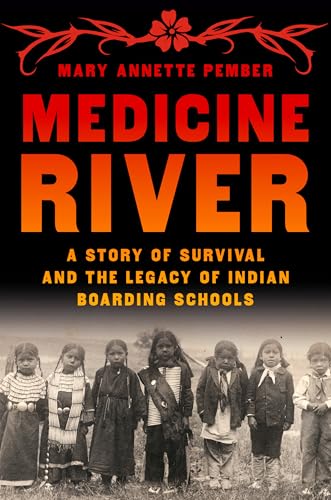
This review contains affiliate links, which earn me a small commission when you click and purchase, at no extra cost to you. Thank you for supporting my small business and allowing me to continue providing you a reliable resource for clean book ratings.
Until a few years ago, I hadn’t known about the boarding schools that the US and Canada sent Native children to from the mid-1800s through almost the mid-1900s. Like many others, I learned about their existence thanks to news that hundreds of unmarked graves of children were found next to former residential schools (the big news broke and gained the most attention at a site or a few sites in Canada).
Tens of thousands of children from a number of tribes were taken from their families, mostly with permission from the parents (in large part because of pressure or because at least the children would supposedly have better food and shelter), to attend schools paid for by the government and often run by religious groups. There was little oversight, no regulation, just the goal of European-settler Americans to help Natives “assimilate” into white life. The schools did educate children, but they also aimed to erase traditions, language, Native names, and faith practices in favor of instilling Christianity and Eurocentric values.
Of course, Native people have known all too well about these schools and the damage done to generations of families and whole tribes. It’s bad enough that the US and Canadian governments were seeking to erase Native tribes and traditions, but then the schools also often treated the children terribly. Too often, children were beaten, forced to do hard menial labor, underfed, even sexually assaulted.
Mary Annette Pember’s mother was one of those children. The legacy of that experience deeply affected the trajectory and quality of her mother’s life and the lives of her children and grandchildren. Pember, an Ojibwe journalist, decided to investigate her mother’s background. She wanted to be able to make sense of why her mother was the way she was. Her research — diving deep into archives, doing hundreds of interviews — allowed her to learn much more than she had ever been told and gave her some opportunities for understanding and empathy.
In more recent years, Native peoples have started to be able to reclaim their traditions and find some healing. But much has yet to be done by our North American governments to allow space for indigenous people to do that rebuilding and healing.
Medicine River gave me a much better understanding of what has been perpetrated on Native tribes and individuals in the past century and a half. I knew about earlier atrocities as European settlers moved in to North America and started battling and moving Natives with force, making promises and then reneging on them. But this is another layer, one that feels even more insidious, in that so much was done in the name of erasing them entirely, not necessarily from existence as individual humans (but that too sometimes), but from existence as distinct indigenous cultures.
The narrative here is tragic and heartbreaking in many ways, but Pember also shares how what’s happened and the continued survival of her Ojibwe people and other Native tribes is indicative of their resilience, strength and tenacity. She shares examples of how being given opportunities to work together as tribes to heal using their own traditions is the most effective way to help — not necessarily Eurocentric medical or psychiatric interventions, useful and scientifically proven though they are for non-Natives. Reading about those programs is encouraging.
I highly recommend Medicine River. It’s vital for those of us as non-Natives to learn this history. The more we know, the more can be done to support these peoples in reclaiming their heritages and moving forward.
Rated: Moderate. Profanity includes 4 uses of strong language, around 25 instances of moderate profanity, 5 uses of mild language, and about 5 instances of the name of Deity in vain. Violence includes a number of references to domestic violence (often simply mentions of injuries or statements that someone was violent; a few references to a specific time a man attacked his wife, and then later a much more detailed account of the savage event), abuses perpetrated on children (largely not really detailed), many references to Natives being mistreated and removed from their lands.
Click here to purchase your copy of Medicine River on Amazon.
*I received an ARC in exchange for my honest review.