
This review contains affiliate links, which earn me a small commission when you click and purchase, at no extra cost to you. Thank you for supporting my small business and allowing me to continue providing you a reliable resource for clean book ratings.
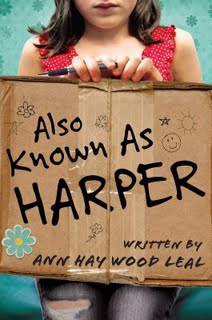
Eleven-year-old Harper Lee Morgan loves to write poetry. It’s possibly fate — her mother named her after the author, after all — but she thinks it’s more that she just has words bubbling up inside her that need to come out. And come out they do: her short, observant, often touching poems are interspersed throughout the book.
“Some people like things shiny and crisp
But I tend to like the things with the scraped up edges.
That way I can tell other people have liked them too.
They’ve torn them and spilled on them
or broken off a corner or two
As they went about the important business
Of their day.
Something smooth and straight and new
Has an emptiness about it
Because it hasn’t been important
To anyone yet.”
Her life is full of fodder for poems. See, her daddy took to drinking and eventually took off for good, leaving her mamma, herself, and her little brother, Hemingway, with too many bills and too little money. Eventually, the family gets evicted from their home, and things go from bad to worse, as the family moves to a motel and eventually is kicked out onto the streets.
The word is overused, but this really is a poignant little book: Harper’s full of spunk and spittle, anger and love, hope and disillusionment. The world that she and Hemingway encounter is a harsh one, but it’s not black and white: Leal paints a gray picture. No one is “good,” no one is “bad,” and even the looming idea of social workers coming after them because they aren’t in school isn’t inherently evil. It’s a world where no one is exactly what they seem — whether it be someone who appears to be homeless, or the next-door neighbor girl who is as mean as they come. It’s a world where literature — To Kill a Mockingbird, specifically — provides hope, escape and a place of refuge.
It also provides a glimpse into the plight of the homeless, but does so without being preachy, which isn’t an easy balance to achieve. Above all, it’s a good story about a girl — a family — just trying to find a way to make it all work.
Rated: Mild, for some mention of abuse and drunkenness by the main character’s father.
Click here to purchase your copy of Also Known as Harper on Amazon.
i loved this book it made me calm and to be the one my mom wanted me to read to her i makes me feel like she loves to read the also known as harper i fall in love with the book when i first starting to read the book. And when my mom went to go to the store then the park i carried that thing every with me and i am almost done with it to and when it over i will be upset because i don’t want it to be over and i will not stop reading the book until my mom or dad tells me to stop and put it down and eat super and i was so mad because my mom want me to stop reading that nice book and when i puut it down i was in a rush to get done eating and start reading my book until i have to go to bed with my book don’t feel like you need to stop reading or don’t read at all and when i got done i had to write my book report and i was so happy to write that paper i am almost done writing it and when i am i will read it ti myself and read the whole thing to my self. and when i did read it i loved it.
ANDWHEN MY TEACHERS READ MY PAPER THEY SAID THAT I WILL GET 100% ON THE PAPER.